Sylvose

The land already produces what we need.

Forests, grasslands, and pastures convert sunlight into cellulose — billions of tonnes, every year, on every continent. Cellulose is just glucose assembled differently. Nothing more.

Photo: natural meadow, Eastern Townships, Québec

The problem we accept as normal

Agriculture demands bare soil.

Every tillage system, every weeding strategy, every seedbed preparation fights what ecosystems want to do — cover the ground with perennial vegetation. We plough, spray, irrigate, and reseed every year. We lose 20 to 40% of harvests to pests, weather, and storage.

Conventional agriculture converts less than 0.2% of solar energy into food calories on your plate. It demands the planet's best land and the entire industrial supply chain to function.

In nature, bare soil is an anomaly. It covers itself with vegetation immediately. We spend enormous energy preventing that.

Photo: plowed field vs. adjacent forest edge

The idea

Harvest what grows. Convert what you harvest.

No bare soil. No annual seeding. No fighting nature. The farm is a stainless steel vessel. The field is whatever the ecosystem wants to be.

Photo: managed forest understory, morning light

The process

Four steps, from biomass to food-grade glucose

Enzymatic hydrolysis of cellulose. The same reaction that occurs in a termite's gut — in a reactor, at controlled temperature and pH, with food-compatible biological inputs.
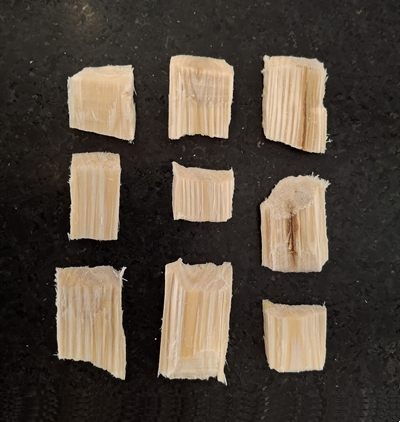
Step 01
Mechanical preparation

Grind or shred the biomass to increase contact surface area. Standard forestry and agricultural equipment.
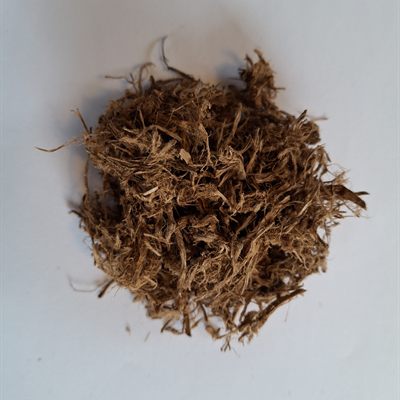
Step 02
Pretreatment

Steam explosion opens the lignin matrix and exposes cellulose fibres. Mild conditions, no harsh chemicals.
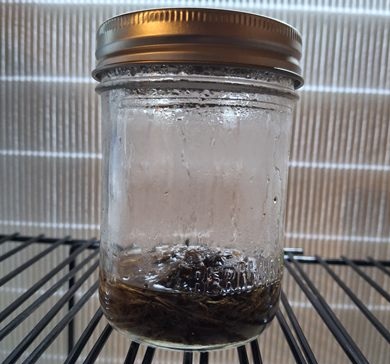
Step 03
Enzymatic hydrolysis

Cellulases from Trichoderma reesei break the β-1,4 glycosidic bonds. Cellulose becomes glucose. Conversion yield of 80 to 90%.
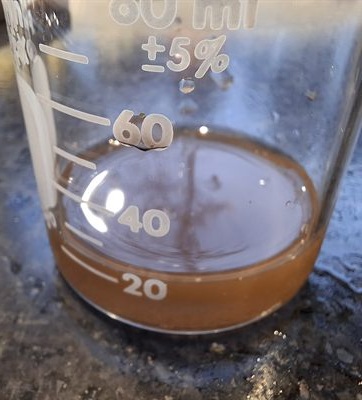
Step 04
Filtration and concentration

Separation of the glucose solution from residual solids. The lignin residue burns to power the process — toward energy self-sufficiency.

The numbers

Closer to competitive than you think

Benchmark: corn syrup
$0.52/kg
Requires prime farmland, tillage, fertilizer, irrigation, pesticides, and the entire industrial logistics chain.
Prairie hay → glucose
~$0.60/kg
100 acres of unfertilized natural prairie → 175 dry tonnes → 53 tonnes of food-grade glucose. Zero tillage. Zero fertilizer. Marginal land.
Managed forest → glucose
$0.40–0.80/kg
Continuous year-round harvest. Fresh chips processed immediately. Lignin provides process energy. Declining with optimization.

The price of corn syrup does not include soil depletion, aquifer drawdown, fertilizer runoff, biodiversity loss, or fossil fuel dependency. The real gap is already closed.

Photo: hay bales in an autumn field

Comparison

What changes when you stop ploughing

Corn Syrup Prairie → Glucose Forest → Glucose
Prime farmland required Yes No No
Annual seeding Yes No No
Synthetic fertilizer Intensive None None
Exposed bare soil Yes No No
Year-round supply No — seasonal corn No — seasonal hay Yes — continuous harvest
Ecological impact High Very low Low
Works on marginal land No Yes Yes
Energy self-sufficiency No Partial Near-complete (lignin)

Global applicability

Anywhere biomass grows.

Conventional agriculture works on about 15% of the Earth's land surface — flat, fertile, well-watered, temperate. Cellulose harvesting works wherever plants grow. That's 70% of the planet.

Boreal forests. Tropical bamboo groves. Semi-arid grasslands. Mountain slopes too steep for tractors. Degraded land. Arctic margins. Desert vegetation surviving on rainfall alone.

It is profoundly irrational to pump groundwater to grow corn in a desert when indigenous vegetation is already converting sunlight into cellulose with nothing but available rainfall.

Photo: biome mosaic — forest, grassland, scrubland

Why this doesn't exist yet

The chemistry works. The economics were never the target.

The cellulosic ethanol industry spent billions trying to compete with $3/bushel corn and $50/barrel oil — and lost on price. The chemistry was never the problem. The benchmark it was measured against was the problem.

Nobody built this for food production. Nobody optimized for decentralized, small-scale, food-grade glucose from local biomass. Those who understand the biochemistry are in universities. Those who understand food resilience are on the ground.

The enzyme knows how. All that's missing is the reactor.

Let the forest be a forest.
Let the prairie be a prairie.
Harvest what grows.
Convert what you harvest.

Fungi had the answer all along.
We just didn't know how to partner with them at scale.

Photo: forest floor with visible mycelium network